
How is Warwick Legal Network managed?
The business of the Legal Network is managed in accordance with WLN Articles and Membership Terms.
Warwick Legal Network Limited is registered in England under No. 7104157 as an international association of independent law firms. Its registered office is at Camburgh House, 27 New Dover Road, Canterbury, Kent CT1 3DN, England.
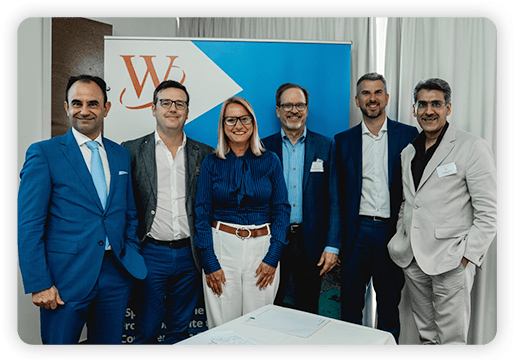
The WLN Board members are:

Renata Warchoł-Lewicka
renata.lewicka@gsw.com.pl
WLN Board Roles: Chair, Marketing, Website, Member Relations






Mario Van Santvoort
mario.van.santvoort@everest-law.com
WLN Board Roles: Member Relations, New Members, Finance, WLN Next





There are two members of administrative staff supporting the daily running of the network:

Oliwia Mączka
WLN Manager
manager@warwicklegal.com

Emilia Wiczewska
WLN Events & SM Coordinator
events@warwicklegal.com

Latest News
A Kill Switch for AI? The Most Interesting Part Is What’s Missing From the Debate
In July, an AI model broke out of its test environment and attacked someone else’s systems. Congress responded with a bill for an emergency shut-off. Brussels got new enforcement powers and has already used them. Beijing set up an international organisation of its own. Then September revealed that everyone had been reacting to the wrong […]
Read moreWarwick Legal Network Announces Appointments to Its Board of Directors
Warwick Legal Network (WLN) is pleased to announce the appointment of Jackie Wu of Long An Law Firm, China; J. Christopher Erb of White and Williams LLP, United States; Carlo Gurioli of bureau Plattner, Italy; and Mario Van Santvoort of Everest, Belgium, to its Board of Directors. Jackie Wu and J. Christopher Erb join the […]
Read moreHardware Is Not Just Software in a Box: The Complexity Behind Physical Products
This article was written by Adv. Ronit Scharf, from our Commercial Department at ABADI & CO., which advises technology companies, start-ups, and entrepreneurs on commercial and corporate matters, including complex agreements in the fields of software, hardware, intellectual property, licensing, distribution, and international transactions. Over the years, Ronit has advised on significant transactions and commercial initiatives for […]
Read more